Designing an iconic business card.
True genius of great design is converting something extremely ordinary into extremely iconic.
Have you ever wondered why business cards are the way they are? I mean most business cards look like this:
Rectangle, white, regular & BORRRRING!
Since 1870, business cards have “gradually and naturally” integrated deep within business rituals. They are shared during formal introductions in the hope of becoming a memory aid. Approximately 7 billion business cards are printed around the world every year. They are as old as paper printing itself, with the first business cards traced back to as early as the late 1800s.
Yet very little design or print-level innovation has happened with business cards in the last 150 years. In my personal opinion, they are the most underrated branding and communication tool. With the right design thinking, a simple thing such as a business card can do wonders and can add tangible, measurable, and vast value to your sales and business introductions.
Problem statement
Design a business card for a young startup in the truck transportation domain that addresses the following:
- Significantly more memorable than an ordinary business card
- Easily found in a stack of 100 or more cards
- Instantly communicates the work and domain of the business
- Makes the receiver compliment the giver on the ingenuity of the design
Process
After analyzing thousands of business cards in my previous time as a designer, I knew that shape and form are the number one leverage. I had already done something like this in 2013, but unfortunately it could not fly. The client budget was limited and the business needed only a hundred cards, so it wasn’t worth the toil.
At WheelsEye, we knew we would be printing thousands of cards every month, so it was worth taking this shot. I had the opportunity to innovate, iterate, and implement the design solution.
I went back to the drawing board and started from where I had left off, studying the card I made in 2013.
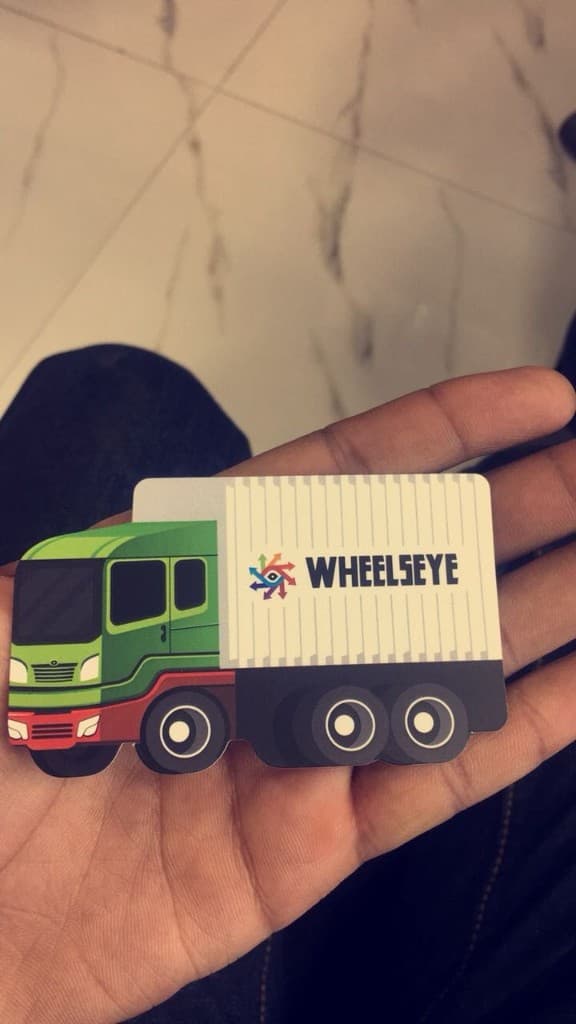
Even if that project had seen the light of day, it would have struggled in the longer run. Besides the budget problem, the old design was inefficient. The key issues were:
- Size. It was quite large, nowhere close to the standard business card size (92×55mm). To fit certain information you need threshold space: you can only write ~8px type in some cases, stretched to 7px. Readability starts to suffer below ~10px in print, so readability and size together compounded the impact on usage.
- Cavity. I had cut out a window so the front “chassis” read stronger, but the cavity weakened the card and made it prone to tears.
Voilà. Two plain problems in sight. I re-imagined the shape of the truck without cavities and within standard business-card dimensions. Below are a few iterations we did.
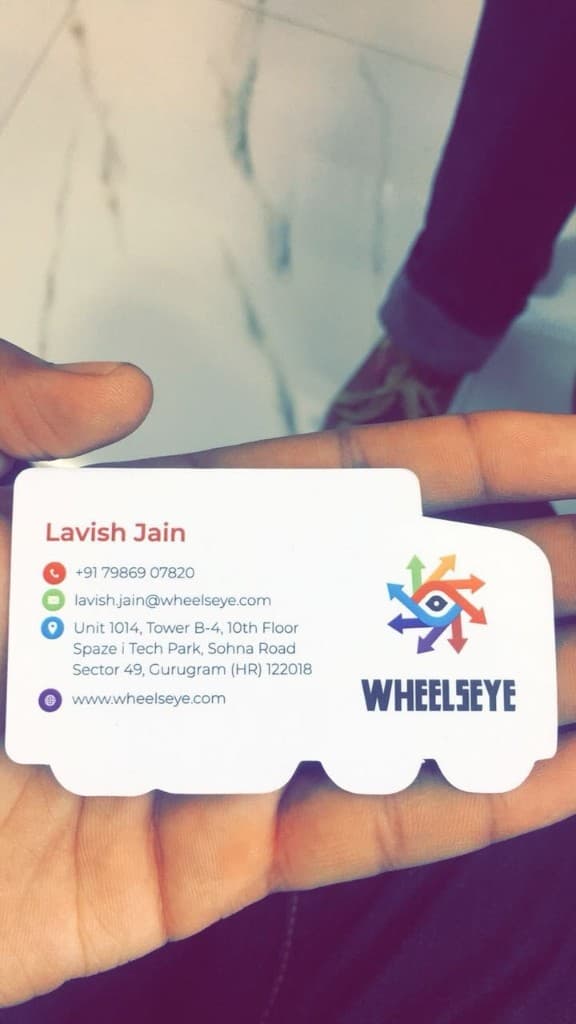
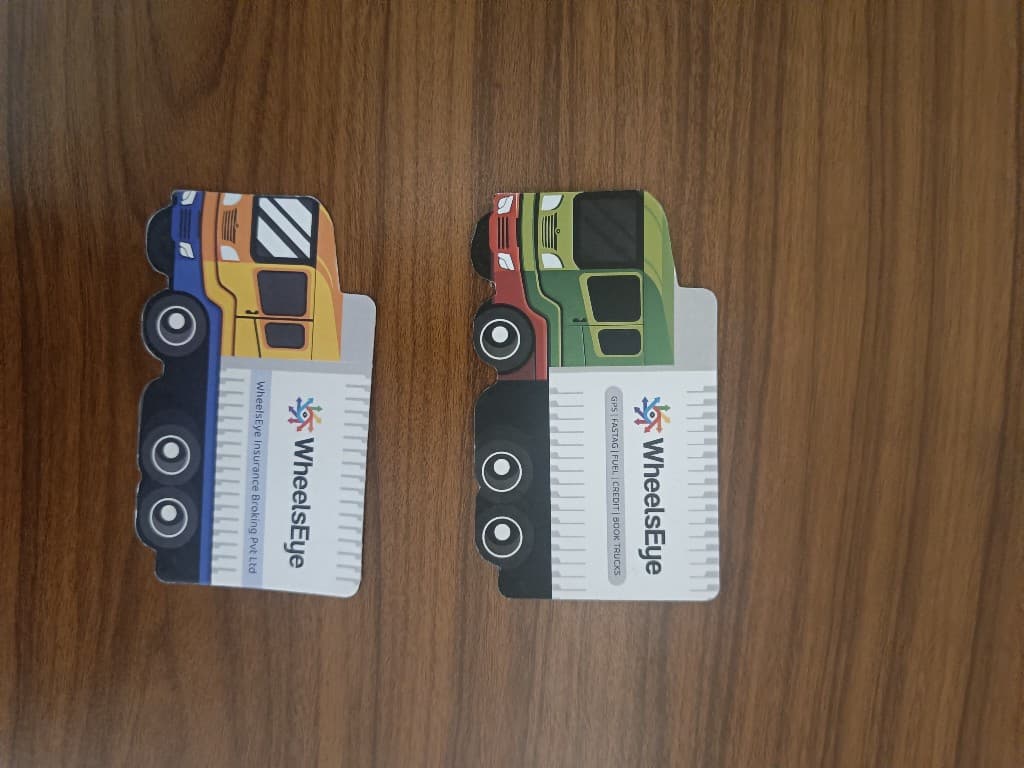
After fixing on two final shapes to pick from, we printed dummy cards and started handing them around.
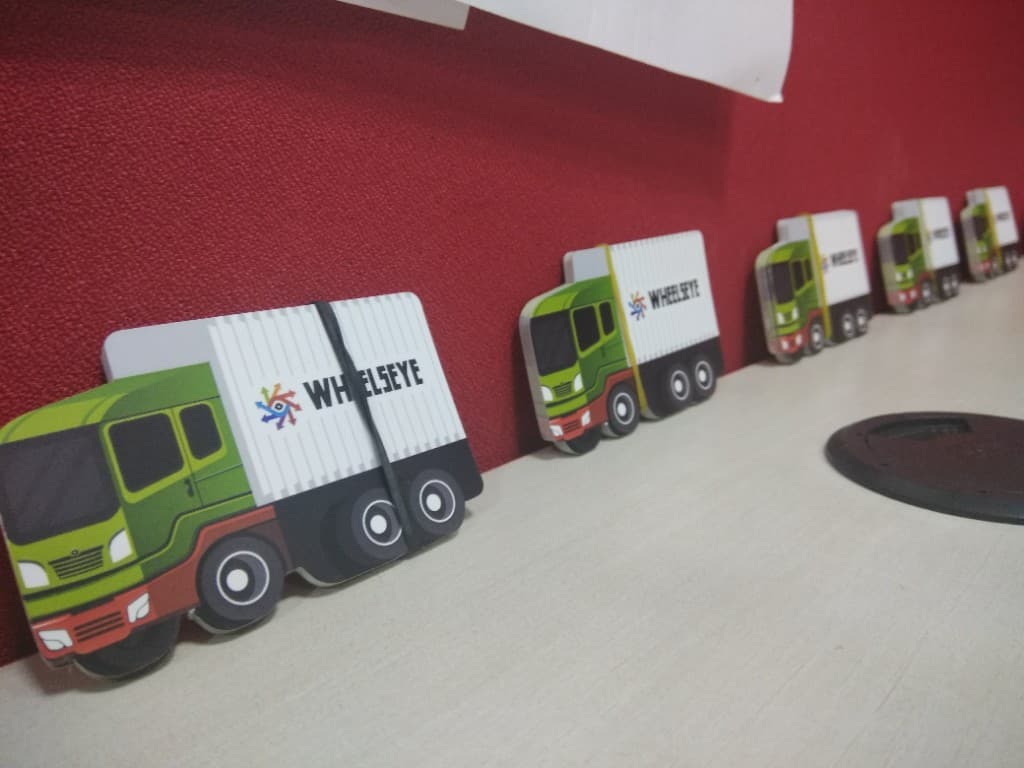
It was an instant hit. The truck-shaped card stood out. Sales and ground teams reported compliments. One rep even used the truck as a toy to comfort his child. On my own visits, many customers had pinned the card on their desk. People instantly recognized that someone from our company had visited. The design stuck.
It has been almost five years since then. We’ve printed close to a million business cards, and it still lands the same way. Every time I hand it to someone new, I see the same smile, the same appreciation for the ingenuity of the design. I still don’t have a single perfect answer for why customers pinned the card under glass or on a board, but I’ve settled on this: the card helps them feel they belong. It connects them to their work. Their desk already has family photos, notes, calendars, and we put a small truck there too, at scale, without spending an extra paisa on media.
I didn’t start with that insight. I wanted the most iconic business card in circulation in India, a design that would thrive in the real world. The saddest thing designers can do is never ship the idea.
With WheelsEye, I had the platform, freedom, budget, and support to put a million such cards out there, and the org backed it because it worked.
So there you have it: a business card that did its job at scale. Happy designing. See you in the next piece.